Mill Hill Ave Command

As in Incident command...

IC established!
We'll have several different sections reporting in - recent research, local topics, or highlighting areas of the Sponsor Hospital Council of Greater Bridgeport protocols.

*** Keep in mind - this website does not replace your protocols, and these posts do not reflect SHCGB or Bridgeport Hospital policies. This is a place to discuss research, controversies, or discuss possible future protocols. When in doubt, check your current protocols through the official source.
Showing posts with label Meds. Show all posts

Saturday, March 23, 2013

Nitroglycerin - Old and New: Pt 3

I really wasn't planning on doing a part 3, since I had thought there was only so much you could say! A recent discussion on Facebook, however, revealed a surprising amount of enthusiasm for a seemingly boring question:

"SL Nitro tabs or spray?"
It probably matters somewhat whether the NTG is being used to treat ACS or CHF, but that didn't come up in the discussion. Other concerns and opinions, as well as some questions, came up, and I thought it would interesting to see what research was out there to back up some statements or answer questions. 

First off, some straight-forward information of UpToDate about the kinetics of the various forms of nitroglycerin. This shouldn't be viewed as the final answer, but it probably isn't far from it.
 

I'll be using quotations out of the comments from the FB post, since this probably represents the thinking of a good number of people (or at least the thinking of people who like to talk about tab versus spray on a Friday night!

Or a Friday night! (Source)
 Onto the questions!
 
"I heard it works faster? Not sure if its true."
...
 "I have always wondered with the sprays just how much nitro they are getting. I know its supposed to be the same as a tab but I guess I just wonder."
 
Does the spray work faster, or the tablet? Which formulation gives a higher dose? Three studies, all from the 90s, suggest that if there is a difference, it's a small one!

Danish researchers compared 2 sprays of 0.4 mg each versus one 0.5 mg tablet, and checked the blood levels. Not surprisingly, the higher-dose sprays reached a higher dose than the tablets, and faster as well. However, after they corrected for the higher dose, they calculated the time-to-onset and blood levels to be equivalent.

Researchers from Montreal took a different tack. Instead of looking at blood levels, they looked at how quickly nitro spray or tablets could cause arterial vasodilation. Both the tablet and the spray were 0.4 mg. The graph shows the response: note that both the spray and the tablet had each reached their max effect at the 3 minute mark. However, the spray both acted more quickly, and had a more prolonged effect, and also had a higher maximum response.
 

A third group took yet another approach. Instead of looking at brachial artery dilation, or plasma levels, they gave nitro during cardiac catheterizations to directly evaluate cardiac effects. After giving 0.4 mg of the spray or tablet, they found a mixed picture. For example, the spray reduced the LV end-diastolic pressure 30 seconds faster than the tablet, but was 30 seconds slower at lowering the LV end-systolic picture. Basically a wash.

"The tabs have the added problem of the non-english speaking patients not understanding the directions and just swallowing them."  
I would add that it is often difficult to get a English-speaking patient to lift up their tongue. In their defense, how often in your life are you asked to do that? It can seem like an odd, "Simon-says" request. 

Therefore, it's an advantage, I think, that you can just shoot the spray at the tongue, under or over. According to the manufacturer of one brand of nitro spray, it can be sprayed on either area, which ought to make conversations simpler in the back of the rig at 2 AM!

Source
 
"Our pt have dry mouth from being anxious. Tabs don't dissolve in a dry area."
Perhaps the best place to store NTG isn't in a little brown bottle - perhaps it should be kept under the tongues of CHF patients who are struggling to breath. It certainly seems to be the best place to keep a pile of NTG tabs from dissolving!

For example, back in 1986, one doctor found that:
"The addition of 1 ml of saline under the tongue of a patient with visibly dry sublingual tissue will moisten the tissue in preparation for dissolving the nitroglycerin. This simple action has frequently resulted in prompt relief of pain when previous doses of nitroglycerin administered by the patient, and later by hospital staff, had failed."
There also appears to be some science to back up this impression. A group from Japan took an innovative route; instead of looking at critical patients, they had subjects with stable angina ride an exercise bicycle until they felt critical! Well, not critical, but until they felt chest pain. The researchers then did two things. First, they checked how wet or dry the subjects' mouths were. Second, they gave them either nitro tabs SL, or a nitro spray.

It turns out that, for those subjects who had wet mouths, it didn't matter which med they got. But the subjects with dry mouths had their chest pain relieved much more quickly with the spray!

Taking it a step further, another team of researchers looked at giving a teaspoon of water at the same time as giving the SL NTG or the spray NTG. The patients were getting a cardiac cath at the same time (but did not have their mouths checked for wetness!). They found that the patients who got the teaspoon of water with the SL tab had a much greater drop in BP than those who got the SL tab without water. With the spray, however,they got the same drop in BP either with or without the water.

So if you don't have the spray, probably the best idea would be to squirt in some saline or H20 right before you pop in the tabs!

Ask FD to help! (source)
 
"Is paste an option?" ... "Having the paste which allows for slower absorption and removal value where after a spray, there is no taking it back."
Many paramedics have a high regard for the topical ointment preparation of NTG. I'm not sure why, since topical drugs are not very useful in EMS - they absorb slowly, wear off slowly, and have uncertain absorbation, especially when patients are cold, vasoconstricted, or poorly perfusing. The table at the start of the post really illustrates this - it can take 30 minutes to start working, and 7 hours to wear off!

I only found one study that compared intravenous, pill, and paste NTG delivery. They took patients with unstable angina, and split them into 2 groups - IV NTG, or a combination of pills & paste. They adjusted the doses in both groups so that everyone dropped their BP by about the same amount. They found two things.

First, both seemed to relieve the symptoms of angina at the same rate. That's good, because that's the only time I use the paste - when I have a hemodynamically stable patient complaining of mild-moderate chest pain.

Second, they found, unsurprisingly, that IV NTG can achieve a higher blood level than the paste. On the IV stuff, levels of NTG were, on average, around 18 ng/ml, whereas the levels 2 hours after paste application only got up to 1.3 ng/ml.

This issue about the "slow & low" blood levels doesn't matter so much for angina, or even a STEMI. NTG likely doesn't save lives in ACS, and we have other agents that can treat pain. But when EMS is treating a hypertensive CHF patient, they need therapy that works fast, works hard, and that can be "turned off" fast as well. The paste doesn't seem to do any of that.

The Bottom Line
IV nitroglycerin is the ideal EMS drug. 

It works almost instantly, it gets to peak effect almost instantly, it's very good at treating severe hypertensive CHF, and it can be titrated very precisely. Also, we don't need to take the CPAP mask off every 5 minutes to give tablets and water. (You know, they call it continuous positive airway pressure for a reason!)

But until your service can work out the training and supply issues for the IV pumps, and until the cost of the spray comes down a smidge, we may be stuck with the tablets for a while longer. Just understand the differences!
Posted by Brooks Walsh at 10:32 AM 13 comments
Email ThisBlogThis!Share to XShare to FacebookShare to Pinterest
Labels: ACS, CHF, Meds, Nitro

Wednesday, March 28, 2012

The IMMEDIATE trial: Should EMS give Glucose-Insulin-Potassium?

The results of the IMMEDIATE trial have been popping up repeatedly today on Facebook, partly because I "like" a few EMS FB pages, and also because one of the authors (Hi Carin!) is a FB friend (IRL too!).

Here's an example of the way the trial is being described:


"Cut the risk of death in half." Sounds great!

The result they are describing, to be specific, is that 8.7% of the people getting the placebo had a cardiac arrest, or died while they were hospitalized, while only 4.4% of the patients getting the study drug did. That's either an (absolute) difference of 4.3%, or about a (relative) 50% decline.

Such an effect would be stunning.  In the years after thrombolytics and aspirin were introduced, the incremental benefits of new therapies for AMI have been getting smaller and smaller. This result here would blow the others out of the water.

For instance, back in 1988, it was shown that either the use of aspirin or of thrombolytics reduced the risk of death in MI by about 2-3% over placebo. The combination was better of course.

After that, it's been harder to show that the more complicated and expensive therapies save that many more lives. When we send a patient to the cath lab for an AMI (instead of giving a thrombolytic in the ED), for example, there isn't that huge a benefit. One recent analysis suggested that, overall, you could only find a 0.7% difference in mortality (6.6% vs 5.9%) between lysed patients, and those that went for PCI. A lot of money for not much gain.

So, if this combination of glucose, insulin, and potassium (GIK) could cut mortality in AMI from 6.6% to, say, 3.3%, it would be freakin' amazing.

"I bet there's a catch. There's always a catch."
Well, I don't mean to be an Eeyore, but the perhaps we should wait for, yes, "further study." I offer three reasons why:

1. They weren't studying mortality.

The principle outcome they were studying was whether the initial presentation of ACS would progress to an MI, or it would be an "aborted" MI. This is the outcome that they believed had the most biochemical and clinical justification, and they clearly thought that it had a reasonable chance of being demonstrated.

It turns out there was no difference in the percent of people who progressed to completed MI - the GIK infusion did not help, at least not here. So the trial is negative for the real primary outcome.

2. There were 12 secondary outcomes.

Look at the table of the results:


Remember: the outcome they staked the success of the trial on was the one at the top: "Progression to MI," for all participants.  The rest are a bunch of secondary outcomes, and they don't count to the same degree as the primary outcome.

Analogy: A friend is flipping a coin, and you call heads. That's your primary outcome of interest. But if you also say to your friend "Okay, I call heads, but I also call it if you drop the coin, if it flips over 5 times in the air, if your phone rings in the next 30 seconds, or if your nose starts to itch in the next 10 seconds.

Now, you may be wrong about heads, but say your friend's nose does indeed start to itch in the next 10 seconds? Will he concede defeat? What will he say?

"No pick! NO PICK!" 
Most likely your friend will point out that the most relevant and important prediction you made was heads vs tails. Furthermore, you called out such a long list of other items that you were almost certain to come up with a positive result. He will insistent on another coin toss, where the primary outcome is now nose-itching, not heads or tails.

The same holds in statistics and study design, and is also why the authors state in their conclusion (my emphasis):
"The primary end point was not significantly different between groups, and the observed favorable results of GIK were based on prespecified but secondary end points, although biologically plausible and consistent with preclinical studies. The study tested one primary hypothesis, 3 major secondary, and 6 other secondary hypotheses. All were prespecified and no adjustment for multiple comparisons among the secondary end points was made; thus, reported significance levels should be considered approximate. Accordingly, given the lack of complete consistency of the findings, and the modest P values for most of the statistically significant findings, it would be appropriate to describe the observed favorable effects on the secondary outcomes as generating clinically testable hypotheses for evaluation in larger cohorts."

3. 30 day mortality seems pretty important too...

Ok, say you can take the "cardiac arrest or in-hospital mortality" results at face value. What, then, shall we make of the 30-day mortality? It was shown to be basically the same in both groups.

We just saw this discussion take place last month. A study from Japan showed that giving epinephrine in cardiac arrest got people to the hospital with ROSC more often, but the 30-day mortality was no different (We'll leave the neuro results alone for now.).

It would be nice if epi put all the dots on the right side of the graph. But it doesn't.
So, say the results are right - people don't die or arrest in the hospital as often, but they still die in the first 30 days just as often. Now, maybe everyone's hospital stay was over 30 days, but I doubt it.

Still feel excited?

Bottom line:

I believe that EMS has an essential role in managing ACS, of course. But, as it stands, giving this mixture to your ACS patients is not yet ready to be added to your drug box.
Posted by Brooks Walsh at 11:12 AM 10 comments
Email ThisBlogThis!Share to XShare to FacebookShare to Pinterest
Labels: ACS, Meds, STEMI

Wednesday, March 14, 2012

Using Dextrose in Cardiac Arrest

You know that there's a lot of controversy about how to run a cardiac arrest - intubating or not, how often to ventilate, or doing a short trial of CPR before defibrillation. This is especially true regarding the "code drugs," like epinephrine. 
Well, okay. Epi works.
But at least when it comes to epinephrine and amiodarone, there are some studies out there, some base of evidence to start the discussion from. This is not true for D50. 
If you look in the 2000 ACLS guidelines, you'll see the list of the "reversible causes" of cardiac arrest. It doesn't include hypoglycemia.
If you don't believe me, look at the fine print at the bottom.
Now skip ahead 5 years, and we now see that hypoglycemia has been added (2005 ACLS):
Down in the green box, at the bottom.
Read through the guidelines, though, and you'll see that not a word is uttered about why this was added.

Now, fast-forward to 2010, and they've taken it out! And, just like they added it without comment, it's gone without a trace.
Poof!
Since the AHA elected not to review any relevant evidence about the topic, I decided to answer some questions about hypoglycemia, cardiac arrest, and the relative benefit of trying to squeeze that huge syringe of syrup into an IO.

1. Does hypoglycemia cause cardiac arrest? 
You figure this would be easy enough to answer, but there is almost no direct data that says so. One case series in 1995 reviewed 3 arrests that the authors thought were associated with hypoglycemia. These patients all had significant other problems (active CAD, cerebral hemorrhage, and severe pancreatitis).

Another case series, looking at patients with severe heart failure, thought that one cardiac arrest was due to hypoglycemia (oddly enough, she didn't have diabetes). And in one last example, a patient in the ICU became asystolic at the same time her blood sugar was plummeting, although she also was developing a severe hyperkalemia at the same time.

The problem with this handful of case reports is that, given the uncontrolled nature of the situations, it's hard to point out cause and effect. Just because one thing occurred at the same time as something else, or even right after, doesn't mean they're related.


Well, look at this from a different point of view. Is there a proposed "mechanism," some physiological reason that hypoglycemia could cause an arrest?

 There is the phenomenon of the "dead in bed" syndrome, where a relatively healthy diabetic is found deceased in the morning. A number of researchers think they've found a link - the usual dip in blood sugar levels at night can cause a prolongation of the QT interval. And long QT intervals can sometimes cause problems! (See these examples at Dr. Smith's ECG Blog.)

A long QTc. (source)
They've been able to show this effect both in the lab (giving insulin to healthy people) and at home (people on continuous ECG and glucose monitoring).

But, just because you can show a longer QT, doesn't mean you have a smoking gun! Others have pointed out that there are probably a number of other factors involved. For instance, it may not be the hypoglycemia that triggers the QT changes, but in fact may be the body's own epinephrine that kicks off the arrythmias!
Now epinephrine is bad for the heart?!?

So, we just don't know!

2. Is the finger stick accurate in cardiac arrest?
Usually, the capillary blood glucose is pretty close to the venous level, close enough that we all trust it. However, in the critically ill patient, the capillary level becomes less accurate, as a number of studies have shown.

Only one study looked at patients getting CPR, though.  This was a pretty big study by cardiac arrest standards - they checked the venous and capillary glucose levels in 50 cardiac arrest patient. It wasn't encouraging. There were 4 patients with "true" hypoglycemia, found on the venous samples sent to the lab. The fingerstick missed 1 of those, and also managed to misdiagnose 5 patients as having hypoglycemia, when they really didn't. (The fingerstick was 75% sensitive, and 38% specific).

Not so accurate!

 3. Okay, we might over-diagnose hypoglycemia. What's the harm?
Glad you asked.

It's the same reason we're trying to cool people down after we get a pulse back  - neurologic outcomes. In some studies, they gave dextrose to some cats before they put 'em into cardiac arrest, while other cats they didn't. The cats who didn't get sugar beforehand had better brains afterwards.

You can't really do this same kind of study in humans (for example). One group in Helsinki, though, checked the blood sugar on VF cardiac arrests, and looked at how well they recovered. Patients who had increases in their glucose after resuscitation didn't survive to hospital discharge as often. This is just the latest evidence - see this review article (50% dextrose: antidote or toxin?) for plenty of other examples.

4. Any evidence giving sugar helps? 
Well, yes and no. There is no evidence that pumping liquid rock candy into someone's tibia helps in cardiac arrest.

Medicine!
Now, there are a lot of other sick people out there, people teetering on the edge, critically ill, septic, metabolically deranged - with a blood sugar headed south, and fast. You have to find those folks and treat them quick. Some of these are kids, with weird metabolic problems, or with sepsis.  But the key is to get to them before they crash.

The authors of the only review I found on this topic concluded that (my emphasis):
"This is obviously a controversial issue and raises the point of whether we should still be teaching that hypoglycaemia is a reversible cause of cardiac arrest when there seems to be not enough evidence to support this. 
Current evidence would suggest that patients may suffer cardio-respiratory arrest with hypoglycaemia, but not because of it." 
The Bottom Line
It's in the protocols, you can certainly give dextrose if you think it's warrented. In he field, though, there's a lot to be done, and sometimes there's not enough hands to do the work. If there's enough crew around, maybe it's fine to dedicate one person to squeezing the D50 in. If space and time are limited, whoever, it's important to understand the effectiveness and and evidence for your therapies.

Posted by Brooks Walsh at 1:34 AM 11 comments
Email ThisBlogThis!Share to XShare to FacebookShare to Pinterest
Labels: CPR, Meds

Sunday, March 4, 2012

Sodium bicarb in a code -Still no evidence

Not sure why, but an EMS Facebook page decided to highlight a JEMS article written over a year ago. It got me to thinking, however.


The JEMS article is titled "Sodium Bicarbonate: Should it be considered as a treatment?" The author is Jim Davis, a FF/RN/EMT-P, and he covers some of the physiologic rationale for the use of bicarb in cardiac arrest, as well as some of the animal and clinical evidence. In the end, he comes out fairly strongly in favor of using it. He concludes:
The routine use of NaHCO3 may warrant a greater role in the delivery of prehospital care for cardiac arrest patients in the prehospital setting.
Until other options exist for the prehospital assessment and treatment of acidosis, EMS providers need to pay more attention to the length of the patient’s down time and recognize the importance of considering acidosis early on, as well as recognizing that NaHCO3 may be a viable treatment option.
I earned my first ACLS card in 1996, long after bicarb had fallen out of fashion, so I had never reviewed the data personally that supported its use in cardiac arrest. Given the number of comments that followed the FB post, however, it appears that this old drug still has a number of "fans" (125 likes!), so I thought that I should acquaint myself with the studies.

Didn't take long - there are only 2 human clinical trials that the AHA cites in the 2010 ACLS guidelines. Let's look at the first.


The first was from 2005, "Improved resuscitation outcome in emergency medical systems with increased usage of sodium bicarbonate" It reviews data from a trial that took place from 1990 to 1992, and it has an interesting design.

First of all, the study (named BRCT III) was primarily designed to look at high-dose versus escalating-dose epinephrine. (High-dose turned out to be a bad idea.) So, basically, the whole paper is an exercise in "data-dredging," because the trial was never designed to look specifically at the use of sodium bicarbonate in cardiac arrest.

They had 16 EMS agencies involved in their study, and some used bicarb almost all the time, while others hardly ever busted out the big yellow box.


 So, they compared the EMS agencies that were "high users" against those that were "low users"

SB = sodium bicarb; ACLS = first defibrillation
 When they identified these agencies who gave bicarb more often and earlier in cardiac arrest (purple box), they found that their patients were more often alive, and neurologically intact, 6 months later (red box). On the other hand, these same "high SB users" were also much better at getting in the first defibrillation faster (blue box), as well as getting in a line, etc. These agencies, simply put, seemed to better at running cardiac arrests in general!


Given the study design, there's no way to piece apart how much, if anything, the bicarb helped.


Anyway, there were a lot of other interesting points in the paper (e.g. giving bicarb earlier doesn't have a physiologic rationale...), but let's move on to paper #2!


The design of this study is even shakier than the preceding study. Weaver et al., conducted a study that ran from 1983-1985 with Seattle EMS, looking at whether it was better to give lido or epi in refractory VF. To summarize the whole paper, I'll just show you this graph:


No difference! Hey, what about the bicarb!? Wasn't there supposed to be bicarb in the study?

Here's how they got bicarb in the study. They decided to look at the cardiac arrests that Seattle EMS had treated in the 2 years proceeding the study, i.e. in the years 1981-1982. Ancient history, indeed.

One of the medics in the study, preparing the bicarb.

During that time period, the common practice had been to start a slow sodium bicarb drip, and not give epi or lido. So they compared the patients from their "true" study with this historical cohort - that's a pretty messy study! And the results were:


Hey, wasn't this supposed to be one of the papers supporting bicarb in cardiac arrest? Instead, the authors conclude that:
In this study, there was no clinical evidence to support any form of drug therapy for initial treatment of persistent ventricular fibrillation.
The Bottom Line
The Bridgeport protocols (PDF download) suggest the use of sodium bicarb in only a few situations:
  • Hyperkalemia
  • Tricyclic OD
  • Metabolic Acidosis 
 Based on this review of the studies cited by the AHA, there does not appear to be any reason to add cardiac arrest to the list. If you hear of any better evidence, send it this way!
Posted by Brooks Walsh at 7:38 PM 8 comments
Email ThisBlogThis!Share to XShare to FacebookShare to Pinterest
Labels: CPR, Meds

Sunday, January 22, 2012

Narcan Nebs - Why? New research doesn't say..

When I learned about naloxone years ago, I went through a few emotional stages. First, I was amazed that such a drug, the perfect antidote existed. Hey, we don't have any such drug for cocaine or marijuana, and especially not for alcohol. How cool! On the other hand, the first time I gave an aggressive dose of naloxone to an opiate-addict, I was really regretting it for a long while.

My patient was also a marionette.
So this recent study holds out the promise of a great middle path - treatment of opiate OD, but without the potential over-correction of bolus dosing, whether by IV, IM, SQ, or IN routes. However, I wonder if the results address a question that anyone has actually asked.

Another way to put it - after reading the paper, I'm not sure what was treated, and whether it (whatever it was) required treatment. 
Also, I'm not clear on what the outcome of treatment was.

Can Nebulized Naloxone Be Used Safely and Effectively by Emergency Medical Services for Suspected Opioid Overdose? is a retrospective study of the use of nebulized naloxone by EMS in Chicago. The methodology is, as usual, important to understanding the conclusions.

Methods:
The Chicago FD EMS system had already implemented the use of nebulized naloxone (2mg in 3ml NS) for various indications, excluding patients in shock or who were apneic. The researchers reviewed the EMS patient care reports of any patient who was given nebulized naloxone for any reason, including "suspected opioid overdose, altered mental status, or depressed respirations."

That's the first item that bears some scrutiny - these indications are vague, and reflect some different conditions. Some of these conditions require naloxone, others don't.

Do all patients with suspected opioid overdose require naloxone? Probably not.

For that matter, do all patients with altered mental status require naloxone? Likely no.

Respiratory depression, of course, is a very good reason to give naloxone, but no definition is provided; Respiratory rate? Hypoxia? Hypercarbia?


Next, what was the outcome they were studying?

The researchers looked at the PCRs to determine if the response was "complete, partial, or no improvement." This is an unfortunate choice of an outcome measure, for two reasons.

The first is that it begs the question - what was the desired response? Are we aiming for clarity of speech, or resolution of hypoxia, or reversal of miosis?

Mission accomplished.
The second reason this makes for a poor outcome measure is that the medics are not "blinded" to the treatment the patient got - they all knew they were giving an active agent. Now, if the outcome was intubation, oxygen saturation, or some other "hard" number, this might matter as much. But given the vague inclusion criteria, this matters a lot. It biases the paramedic when they're examining the patient for a response. and would predispose them to to "see" an effect that isn't really there.

Results:
When we look at the results, we can't be sure what to make of them, given the study design. Out of 105 patients, naloxone was given to:

Suspected opioid overdose      70 patients (66.7%);
Altered mental status               34 patients (32.3%);
Respiratory depression              1 patient (0.9%).

This is an odd collection of diagnoses, as only the last item is viewed by toxicologists as an indication for naloxone. "Suspected opioid OD" can be confirmed through urine, serum, or just asking the patient later - it isn't a diagnosis that in itself requires treatment.

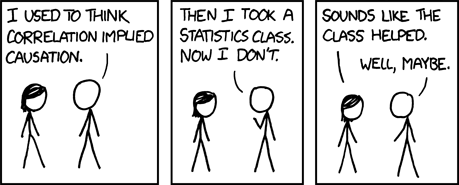
"Altered mental status" may be due to the use of opioids, but it may also be coincidental. For example, Peter Canning describes a case in which he gave naloxone to a patient who had a subsequent return to full LOC. It turned out to be entirely coincidental - the patient actually had an intracranial hemorrhage.

http://xkcd.com/552/

There are so many potential causes of altered mentation, that the "knee-jerk" use of naloxone isn't likely to be very helpful. This was shown in a Pittsburgh study from 2009: The routine use of naloxone by EMS for "depressed mental status" didn't help in 92% of cases.

So, what was the response to the nebulized naloxone in this study?

Complete response                    22%
Partial response                         59%
No response                              19%

This is the frustrating part - they don't say what the responses were (Increased RR? Wide pupils? Screaming and vomiting?). Also frustrating is that the majority of response were partial, which can be really subjective. They try to break down the results in the table:


...which doesn't really show any meaningful differences between the complete/partial/none-responders.

In fact, it shows an interesting similarity that all 3 groups have: the average RR was above 12/minute. In many patients, it appears to have been significantly higher- the "No Response" group had an average initial RR of 18.

The bible of toxicology describes the goal of naloxone administration as restoring "adequate spontaneous ventilation," not the reversal of slurred speech, sleepiness, or tiny pupils. Frankly, it's also not a medical goal to thwart someone's high. Nonetheless, at least one toxicologist feels that nebulized naloxone is an "attractive alternative."

My take on this study:
You can nebulize anything, and it was shown here that paramedics could nebulize a clear liquid containing salt and naloxone. 

It didn't show us if it worked, because almost 80% of the responses were "partial" or less. 

Even with a 22% rate of "complete" response, we don't know what to conclude as they didn't show us what they were trying to treat.

Review of the protocols:
Naloxone is only mentioned in the altered mental status guideline - there is no indication under the "Overdose/Poisoning" or "Respiratory Arrest" sections.


You generally don't want to reverse opioids unless you find coexisting respiratory insufficiency. Not a whole lot of benefit, and enough potential for adverse effects!

For example...


Enjoy!
Posted by Brooks Walsh at 12:42 PM 8 comments
Email ThisBlogThis!Share to XShare to FacebookShare to Pinterest
Labels: Meds

Friday, January 20, 2012

Prehospital Analgesia - Recent Research

Enough cardiology - time to come back to a topic that's a lot closer to my heart.

Given the relative safety of morphine, the reversibility, the low cost, as well as the immediate and clinically-apparent benefit, I've always been interested about the hand-wringing and strong feelings that surrounds the use of this medication. Frankly, I'm more worried about giving Lasix to someone who turns out to have pneumonia, or overdosing an atrial fib patient on diltiazem.

I wanted to review some recent results in the literature, highlighting a few aspects. While giving any medication requires thought and attention from the paramedic, I think some of the results should make paramedics feel more comfortable with breaking out the box o' narcs.


Should have a lock on it. Two locks, really.


How much morphine can we give?

The first paper, while not that recent, points out safety and effectiveness of the aggressive use of morphine. Is there an ideal morphine dose for prehospital treatment of severe acute pain? describes a study done in a French EMS system. That system uses physicians in place of paramedics, but I'm not sure that matters so much for this topic.

They randomized patients to 2 different IV morphine dosing strategies:

Group A - Start @ 0.05 mg/kg, then 0.025 mg/kg every 5 min.
Group B - Start @ 0.1 mg/kg, then 0.05 mg/kg every 5 min.


Pretty strong doses; a 220 lb guy in Group B would get an initial bolus of 10 mg of morphine. The endpoint was getting the pain score below a 3/10, and Group B appeared to get there quicker (no surprise).


The interesting part was the rate of adverse events:


Basically no difference. An extra 3 patients in group B vomited, and one person had their sat drop to 92% - nobody got intubated or became hypotensive. Pretty safe, and very effective.

Great, but that was a study setting. What about in the "real world?"

In a follow-up study that was published last year, they looked at the "real-world" use of morphine and sufentanil in the same EMS system. It was a prospective trial, but just observational. Patients got at an average initial dose of morphine of 0.083 mg/kg, but not so many titration doses. Again, they found that this kind of dose was very safe, as can be seen in their Table 3.


Looking at the Greater Bridgeport Sponsor Hospital protocols, with a max of 0.1 mg/kg of morphine (before talking to med control), you can feel pretty confident giving an initial bolus of 5 mg in adults!

Well, morphine is going out of style. How about fentanyl?

If you read a recent post by RogueMedic, you know that fentanyl is supposed to be pretty strong, so we might expect that it has a high rate of hypoxia and hypotension. In fact, though, it appears to be just as safe as morphine.  

(Well, not always - there is one way that fentanyl can cause respiratory failure that you may not have prepared for:)
Fentanyl patch stuck in the left bronchus: Reference

The study Fentanyl in the out-of-hospital setting: variables associated with hypotension and hypoxia looked at the experience of an aeromedical service. They used relatively high doses of fentanyl, and medics could give up to 5 µg/kg total every hour. For those of you who don't have experience with this drug, that's about equivalent to 0.5 mg'kg of morphine every hour, or 35 mg for a "average" weight patient. The researchers checked the vital signs before and after drug administration to catch any problems with hypotension or hypoxemia. 

They gave plenty of opioid: The average inital dose was 1.1 µg/kg,while the average total amount given during transport was 3 µg/kg (or 0.3 mg/kg of morphine-equivalents).

Hypotension? Not so much. 

Systolic blood pressures did not, on average, change after giving fentanyl. There were some people, about 5% of all the patients, who had hypotension after getting fentanyl, but about half of those patients were hypotensive before they got the drug as well. 

On the other hand, some hypotensive patients (about 50%) had their blood pressure increase after fentanyl! Go figure...

As for hypoxia, none of the non-intubated patients became hypoxic, 0%. 

So, what can I do with this information on my next shift?

Most importantly, remember that morphine is a pretty safe drug. Looking over the doses they were giving in these studies - pretty aggressive. Now, there is always a risk of some rare event happening, and your patient drops their pressure to 70 and stops breathing. But rare events can happen with any of the drugs in your kit, not just the narcs. The rare patient will have an anaphylactic reaction to aspirin, but it is still a good idea to give it (assuming you've asked about drug allergies).


Posted by Brooks Walsh at 12:17 PM 5 comments
Email ThisBlogThis!Share to XShare to FacebookShare to Pinterest
Labels: Analgesia, Meds
Older Posts Home
View mobile version
Subscribe to: Posts (Atom)
Follow @BrooksWalsh

About Me

My photo
Brooks Walsh
From the Paris of Southwestern CT...
View my complete profile

Pages

  • Disclaimer (Read this!)
  • Who I am, where I'm coming from.

Blog Archive

  • ▼  2015 (2)
    • ▼  June (1)
      • Guest Post - Perhaps Paramedics Should NOT Intubate!
    • ►  March (1)
  • ►  2014 (13)
    • ►  June (2)
    • ►  May (1)
    • ►  April (3)
    • ►  March (3)
    • ►  February (2)
    • ►  January (2)
  • ►  2013 (19)
    • ►  December (2)
    • ►  October (1)
    • ►  September (1)
    • ►  August (1)
    • ►  July (2)
    • ►  June (1)
    • ►  May (3)
    • ►  April (3)
    • ►  March (3)
    • ►  February (1)
    • ►  January (1)
  • ►  2012 (33)
    • ►  December (5)
    • ►  November (1)
    • ►  October (1)
    • ►  September (3)
    • ►  August (5)
    • ►  July (3)
    • ►  June (2)
    • ►  May (1)
    • ►  April (2)
    • ►  March (4)
    • ►  February (1)
    • ►  January (5)
  • ►  2011 (9)
    • ►  December (3)
    • ►  November (1)
    • ►  October (1)
    • ►  September (4)

My Blog List

  • ECG Interpretation
    ECG Blog #533 — A Wide Tachycardia
    4 days ago
  • Street Watch: Notes of a Paramedic
    Government, Politics, Bureaucracy
    3 weeks ago
  • Dr. Smith's ECG Blog
    Long QT with K 3.4 and Mg 1.2
    1 year ago
  • EMS Blogs Posts
    Getting There
    2 years ago
  • Rogue Medic
    What Can We Expect in the Upcoming Year?
    3 years ago
  • Too Old To Work, Too Young To Retire
    2021 In Review
    3 years ago
  • EMS 12-Lead
    6-Step Method for 12-Lead ECG Interpretation
    5 years ago
  • Resus M.E!
    The Resus Marshal
    7 years ago
  • EMS Patient Perspective
    Full Circle of Simulation
    8 years ago
  • The Medial Approach to Emergency Medicine
    EMS 12-Lead: Triaging Triage ECGs
    9 years ago
  • 12LEADEKG
    Abdominal and chest pain
    9 years ago
  • Emergency Medicine Literature of Note
    WordPress Migration Time
    9 years ago
  • My Variables Only Have 6 Letters
    Guest Post: Supraglottic Airway Devices Should Be Your First Line
    11 years ago
  • ACLS - ECG - KG-EKG Press > ACLS COMMENTS - Master Page

Followers

Labels

  • ACS (9)
  • Airway (1)
  • Analgesia (4)
  • Anaphylaxis (2)
  • Atrial fibrillation (1)
  • capnography (1)
  • Cath lab (1)
  • cervical spine (2)
  • CHF (4)
  • Cool case (7)
  • COPD (3)
  • CPR (5)
  • de Winter (1)
  • Devices (2)
  • ECG (11)
  • Lead placement (1)
  • Meds (8)
  • Myocarditis (1)
  • Nitro (4)
  • Oxygen (4)
  • Paramedics need to read EKGs (6)
  • Patient satisfaction (1)
  • Pediatrics (3)
  • Sepsis (1)
  • STEMI (10)
  • Syncope (1)
  • Transport (2)
  • trauma (3)
  • Vital signs (1)
Powered by Blogger.