As in Incident command...

IC established!
We'll have several different sections reporting in - recent research, local topics, or highlighting areas of the Sponsor Hospital Council of Greater Bridgeport protocols.

*** Keep in mind - this website does not replace your protocols, and these posts do not reflect SHCGB or Bridgeport Hospital policies. This is a place to discuss research, controversies, or discuss possible future protocols. When in doubt, check your current protocols through the official source.
Showing posts with label Pediatrics. Show all posts

Friday, September 28, 2012

Why do paramedics not want to treat pain in kids?

Forgive me for my provocative title.

Of course, most paramedics do want to treat pain in kids. It's been shown, however, that EMS (like many areas of medicine) doesn't do a great job treating it. Why is that?

Quantitative versus qualitative research
Studying many questions in EMS is relatively straightforward, as you can always look at the numbers.

Does prehospital CPAP prevent intubations? Just count how many people get tubed in the ED! Does use of a CPR-machine save lives? Well, count up how many patients get ROSC!

These sorts of studies, where we look at numerical comparisons, rates, and statistical differences are all quantitative - these rely on obtaining and comparing numbers. To answer this question (about what keeps medics from providing analgesia to pediatric patients), however, EMS researchers in Rochester NY used a qualitative method. 

So this study didn't involve measuring or testing, and collecting a bunch of numbers. Instead, the authors went out and, essentially, listened to what paramedics had to say on this topic!

PubMed link


How they did they do the study?
Getting a paramedic to open up and share their experiences is not exactly the hardest thing in the world...

Pictured: A whole book about medics talking.

 Far from just writing down a bunch of "war stories," however, the authors followed a few steps to ensure they obtained useful and credible information. 

They recruited medics from a variety of agencies in western NY state, with differing levels of experience, and varying levels of comfort dealing with kids. They also brought in a paramedic to actually conduct the interviews, figuring that this would be less intimidating than a physician or PhD. They also tried to figure out a useful way to guide the interviews, designing a set of provocative questions, but also planned to let the medics talk freely and widely on the topic.

So what did the medics say?
Some surprising things!

Now, this sort of research isn't designed to produce statistics or predictions, but I want to highlight some of the results that were felt by the authors to be new and significant, as well as direct quotations from the interviews.

The authors found that "the majority [of medics] viewed relieving pain as unimportant and not part of their job."


They also saw that the medics, in general, "were also concerned that the patients might have an unknown allergy to morphine ... [and had] a similar concern for causing respiratory depression"


Lastly, they found that paramedics "reported receiving generally no response or a negative response from hospital pediatric ED staff."


There are a number of other results and quotations in the article, but I think that these 3 selections convey the general point. Analgesia for pediatric patients is seen as fraught with risks, and is not emphasized as a priority.

As the medics see it, there are few ways to win, and many ways to lose!

Given the inconsistent support from supervisors and ED staff, there is every incentive to shove the issue off, and let the ED handle analgesia.

So, what can be done?
Paramedics are known for their aggressive attitudes in the field, and they don't shy away from challenges. Drilling needles into bone, cardioverting VT with a pulse, or even giving tPA in the ambulance - medics get into the field so that they can tackle the tough problems, not avoid them!

So it's not too hard to figure out where the medics acquired these perceptions about pediatric analgesia. They got these ideas from their supervisors, from their EMS educators, from their rotations in the ED, and in discussions with ED nurses and medical control doctors every day. I agree wholeheartedly with the authors when they conclude that
... the onus of responsibility to change the belief structure regarding pediatric pain management lies not with the paramedic, but with physicians, hospital staff, and paramedic supervisors.

The Bottom Line...
Medics, like all of us, like to engage in a modest amount of medically-appropriate bragging.

"Modest bragging" source

Whether it's sinking a tight ET tube, reversing a bad CHF with aggressive CPAP and nitro, or cardioverting VT in a patient's living room - it's all good material for illustrating your medical prowess. So why not with analgesia?

Perhaps in the future, we'll have quotations from medics that read a little different from those in this study. So, if medical control physicians all do our job right, we'll hear medics bragging about how many mg/kg of morphine they gave, or how quickly they medicated the kid with a femur fracture!

With that in mind, I made my own EMS meme. If we do our jobs right, maybe this will be less of a joke, and more of a reality in the future.

I can getz artsy on Cheezburger!

Wednesday, January 11, 2012

Strange case of pediatric syncope

Faints (not feints)
Frankly, a kid who faints is not the most interesting patient. Young ladies have a habit of swooning, especially if Justin Beiber is involved. As for young guys, they are hardly immune:


So it it usually isn't too exciting to be called for a 14 year old girl who had fainted. Usually.


The Patient
During the evening she had been feeling an upset stomach, describing some epigastric discomfort, as well as nausea. Her parents remember that she looked a little pale before the episode ocurred. She was walking into the kitchen when she began to feel faint, and was seen to fall onto the floor. Her parents, frightened, called 911 immediately.


The ALS crew found her sitting up in a chair, a tissue held up to a small cut on her forehead, but otherwise looking well. Vital signs were normal, and the parents were starting to feel like they had been overreacting in calling 911. While sitting in the chair, however, she suddenly stiffened up her whole body, and then went limp. After being put on the floor, she regained consciousness. Although she came around quickly this time as well, everybody decided that calling 911 had been just fine, and she was moved to the ambulance for transport to the ED.


During transport, the medic noticed that her heart rate was slowing down episodically, dipping into the 40's. She still looked pale, and vomited a few times, but her mental status was fine, and she never became hypotensive. A rhythm strip was obtained:


An ECG was also acquired:


The transient episodes of bradycardia did not require pacing or medication. She was brought into room 4 (our trauma/acute resus room), looking a bit intimidated by the number of nurses and doctors around her. She still looked pale, but her speech and mentation were normal. Naturally, we acquired an ECG immediately (about 30 minutes after the EMS ECG):


Vital signs were P-100, R-20, BP-127/59, SaO2-100% RA. Her lab work was uninteresting, and a CT of her head show no fractures or bleeding. The cut on her face needed only some Dermabond.


ECG analysis
The ECG and rhythm strip obtained by EMS were acquired only a minute apart. The rhythm is interesting, showing a sinus rate of around 120, but with a 2:1 AV block, so that the ventricular rate averages 60. On the rhythm strip we see two episodes of more advanced AV block, with 3:1 conduction, while on the 12-lead we see an apparent Wenkebach pattern in complexes 5-9, with a progressively lengthening PR interval. The QTc, fortunately, appears normal, and there are no signs of pre-excitation, Brugada, or arrhythmogenic right ventricular dysplasia.


The ED ECG shows, first of all, how frakkin' important it is for EMS to grab ECGs in the field, since a number of features had changed on the ED tracing. In the ED there is only a mild 1st-degree AV block (214 ms), and no sign of Wenkebach phenomena. The computer read the QTc as 441 ms, "borderline prolonged," and it does appear to violate the "half the RR interval" rule for a normal QT.
https://www.kg-ekgpress.com/


Hospital course
Our patient was continued on cardiac monitoring during her hospital admission, but 24 hours of telemetry revealed only a single further dropped beat, as well as a resolution of her PRI prolongation. Tests for Lyme, as well as rarer infectious causes of AV block or myocarditis, were negative. She was due to start a Holter study upon discharge, and follow up with a pediatric cardiologist.


Turns out HIPPA does not apply to dogs, so I can show you a canine Holter monitor.
Discussion
1. Was this a seizure or what?
Although the second episode of syncope this young lady had began with an apparent seizure, it was unlikely to represent  a primary neurologic process. First of all, the seizure was described as a brief whole body stiffening, follow by loss of tone. While some forms of epilepsy may manifest in this manner, it would be unusual. Also, there was no post-ictal confusion described by the paramedic or parents, making a "true" seizure unlikely. Other historical and exam findings also weigh against a seizure. A good illustration of other factors to consider are found in this article "Seizure versus syncope (PDF download), which features a handy guide:


So this was likely a "convulsive" sub-type of syncope (brief myoclonus due to low blood flow to the brain), following the flowchart above.


2. Ok, it's syncope - what kind was it?
Reading the textbooks, there are dozens of terms to describe the various supposed kinds of seizures; micturation, situational, vasovagal, neurocardiogenic, autonomic, reflex... you get the idea. Really, there are only two types of syncope out there, from an EM/EMS point of view; cardiac or non-cardiac. Let's start with the second.


"Non-cardiac" does, of course involve the heart, but it's role comes in at the end of a sequence of events which are, as usual in medicine, not well worked out. The standard explanation sounds so weird, it may even be true.


For whatever reason, the body can pool blood excessively in the lower extremities. To compensate, both vascular tone and cardiac output increase substantially. Unfortunately, various pressure receptors in the heart now think the body is hypertensive, and act as if the patient has high intercerebral pressure; the heart rate drops, and cardiac output falls.


The fall in heart rate and blood pressure appear to be mediated by the vagal nerve, at least in part, so people call this vasovaagal syncope. On the other hand, since the sympathetic pathway is also affected, others call this autonomic syncope. Of course, as the picture above shows, the brain has a role in this, so it also called neurally-mediated syncope. If bardycardia, or even asystole (transient), are the main manifestations, it may be termed cardioinhibitory, but if hypotension is prominent, it can be instead called vasodepressor syncope. 


Whatever. The important point is to distinguish these benign types from cardiac causes. This kind of "syncope" is caused by a primary problem within the heart, and may not produce all the autonomic symptoms (sweating, warmth, nausea) that normal syncope does. It comes on fast, and can occur even if the patient is seated or supine. This table from a Nadas' Pediatric Cardiology reviews the differences with normal, or "neurally-mediated" syncope:


Remember how normal syncope has a bunch of vague terms to describe the same thing? In contrast, there are 3 clear types of cardiac syncope, with clearly defined etiologies.


First, there are structural causes (hypertrophic cardiomyopathy, tetrology of Fallot, pericardial tamponade, amongst others). 


Next, tachyarrythmias can induce syncope. Examples include long QT, Wolf-Parkinson-White, and Brugada


I calculated 411 msec. Normal


Last, but certainly not least, we have to worry about bradyarrythmias - sick sinus syndrome, overdose of beta-blockers, and, of course, advanced AV blocks!


3. Finally! So, did the AV block cause the syncope?
Well, that is the main question! 


Let's consider a few factors in answering. First, our patient is young and otherwise healthy - she is old enough to be fairly sure she doesn't have an undiagnosed heart defect, but young enough that she hasn't had a few infarcts take out her conduction system. Right off the bat, it seems unlikely she could have some intrinsic heart disease causing her syncope.


Next, her presentation fits with a vasovagal/neurally-mediated/autonomic syncope. Look back up at the table above - she had some lightheadedness before she syncoped, she felt cold, had no history of syncope during exercise, and it occurred while she was standing (although the second event happened while seated upright). She looked pale afterwards, and felt nauseous for a time afterwards. 


Lastly, we know that her ED ECG was almost  completely normal, and an ECG the next day showed resolution of the PR interval prolongation. For all these reasons, it seems unlikely that she had some cardiac disease - structural or dysrythmic - that produced the AV block. Most of those problems don't disappear overnight.


4. How often do you see AV blocks in syncope?
Not too often, but it happens. 


In a recent study (Electrocardiographic characteristics of atrioventricular block induced by tilt testing.), researchers noted looked at patients who had been put on a tilt-table to investigate the cause of their fainting. The idea is that through putting the patient through a fancier version of doing orthostatic vital signs, we can provoke and replicate a syncopal episode. Now, it's not a perfect test, with plenty of false-negatives and false-positive, but it is lot less hassle than the alternatives.
Looks more like a catapult. Just sayin'.
Out of 786 patients who they tested, 31 developed an AV block, about 4%. And not just some minor first-degree stuff, mind you. They summarize the results in this table:


The AV blocks didn't last long, less than a minute, on average. The majority of these patients had some form of second- or even third-degree block, as well as having significant periods of ventricular aystole! 


A few key results from this study suggest that our patient had a faint causing her AV block, rather than the other way around. 


First, they found that patients in their study had PP intervals that varied significantly. This is subtle, but can be appreciated on the EMS rhythms strip.
If you use the interval between the 2 non-conducted P waves as the standard (5th arrow), it's clear there is some PP variability on this strip.


Next, they found that these AV block developed gradually, usually after PR interval prolongation. We can see this variable on the EMS 12-lead:


5. What did the cardiologists diagnose her with?
They felt this was all likely due to "hypervagal tone," perhaps provoked by some mild hypovolemia. The results of the Holter study are pending.


Wrapping it up
EMS is in a privileged position, able to evaluate these patients within minutes after their episodes. You may be able to evaluate cardiac events that we might not ever see otherwise. This was a healthy young lady who had some pretty rare features of a common condition. It would have been easy to "BLS it in," and not get an ECG, or even a rhythm strip. Without a thoughtful medic in the back of the rig it may have missed entirely.

Saturday, December 17, 2011

Adrenal insufficiency - protocols in the future?

Or, if you work in states other than just the Nutmeg State, the present!

One development in EMS in the past few years has been the push in many states to get prehospital providers to carry and administer steroids to people with various forms of adrenal insufficiency. Unlike cardiac arrest, intubation, or cervical spine injury, there hasn't been a great deal of talk in the EMS blogs about this subject, so I was hoping to address that deficit!

First off, why should I care about adrenal insufficiency?

Well, one answer is that some one is going to make you care. Most likely, that someone will be the CARES Foundation. This group was started by the parents of a child with congenital adrenal hyperplasia (CAH) (relax if you aren't familiar with CAH - we don't see it very often in the ED!). Back in 2009, they started focusing on the role of EMS in treating children with CAH. If we take a look at this map of the United States that shows which states have EMS protocols for treating CAH crises:
We can see that the advocacy efforts of the CARES Foundation has been quite successful in changing protocols in the northeast part of the country, with one small exception - Connecticut!

The more astute readers will say - "Hey! Out of every 16,000 live births, only one will have classic CAH! That doesn't sound too common." Well, yeah, you're right. On the other hand, there are a lot of people out there in the world with adrenal insufficiency, and they can get into the same problems.

Sooo... What is CAH, adrenal insufficiency, and stuff like that?

Let me explain the two forms of adrenal insufficiency you'll deal with. This is a crazy-deep topic, but there will be basically two kinds of steroid problems you'll see.
  1. Little kids with a known diagnosis of CAH, and,
  2. Adults with a diagnosis of adrenal insufficiency who tell you that.
I.e., this is how you diagnose adrenal problems these in the field:

Let me give a very brief review of the physiology of adrenal problems. So, this gets complex fast, but there are some main points. Here's a picture of how steroids get made in the body.

First, the body gets an infection, or gets shot, or even just sees a scary movie - somehow gets stressed out. Time to release the stress hormone - cortisol! The body follows a Rube Goldberg series of steps to make cortisol:
  • The hypothalamus makes CRH
  • When some of that CRH drifts by the pituitary, it makes some ACTH
  • In turn, the ACTH triggers the production of cortisol from the adrenal gland.
  • Eventually, the elevated cortisol levels shut down (temporarily) the production of CRH and ACTH.
  • When the cortisol levels settle down, the process is ready to go again!
Kids with congenital adrenal hyperplasia (CAH) have most of the system in place and working, except for the last part - their adrenal cortex can't make the cortisol (and some of the other stuff). These kids are dependent for the rest of their lives on steroids. It's somewhat like diabetic kids, who are insulin-dependent. These kids are cortisol-dependent.

Adults can a variety of different problems with their steroid-making process: Maybe the have Addison's disease, like a former president did. Maybe their adrenal glands eroded during an infection. Maybe they're taking mondo amounts of steroids to prevent transplant rejection, and their body has "forgotten" how to make it's own steroids now. These folks also are on chronic steroids.
Nope. Try again.
So, generally, as long as the kids and adults are taking their "usual" daily dose of steroids, everything goes fine. Usually.

Okay, it sounds like we have the problem solved then!

Er, almost. The problem is that the body regulates the ebb and flow of cortisol over a wide range of levels. For example, your morning level is about 10 times higher than your midnight level.

When you get sick, no one is quite clear what the right level should be. When kids get sick, parents are taught that their daily dose of pills should be significantly increased, and are given detailed instructions (PDF download) about when to, say, double or triple their usual dose.If things get real bad, they have a emergency steroid injection kit, and the parents have practiced how to draw up and give the shot.

Good, the parents are all over it. What's left for us?

Well, even fairly small kids can't hang around their parents all day, every day. They may get stuck with. well-meaning relatives, day-care, or even a lowly babysitter. While the parents may be up to speed on the the when and how of injected steroids, it's asking a bit much to expect 16 year-old sitter to do that too.
Not what she signed up for.
Instead, she'll call 911, and shove the pamphlets, medic-alert stickers, and meds at you. Your turn.
 Naturally, you know all about assessing acute adrenal insufficiency, right?

What do adrenal-insufficient people in a crisis look like?

First off, these people already have a history of chronic adrenal insufficiency. That begs the important question: What exam finding indicates a patient has chronic adrenal insufficiency?

Answer

Next part in assessment is figuring out what else is gong on. Something had to trigger an episode of acute insufficiency; there are diverse causes, but all of them stress the body in some way. The general causes, though, are: Stopped steroids abruptly, fever/infection, a large trauma, vomiting. The New Hampshire protocols, for instance describe which patients to treat with specific therapy:

Patients will look shaky, gray, sweaty. The may be hypotensive and hypoglycemic as well.

The paramedic should look at the precipitating events, and treat those, whether it's a trauma, an asthma attack, a burn, a bad episode of gastroenteritis, or pneumonia. Second, they should address the symptoms of the episode: Zofran for vomiting, dextrose if they're hypoglycemic, IV fluids for hypotension. An EKG could show signs of hyperkalemia, and you should be ready to ask med control for calcium chloride.This is all stuff you should be doing now.

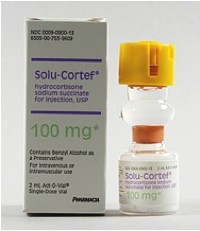
The specifc therapy for acute adrenal insufficiency is hydrocortisone, or Solu-Cortef:
Adult dose = 1 box, IM, IV, or IO.
Now, CT does not have any protocols so far regarding this medication. You can check out the protocols that RI, MA, NH, and NY have, though. (Those are all PDF downloads, BTW)

So, be ready for the change when it comes!